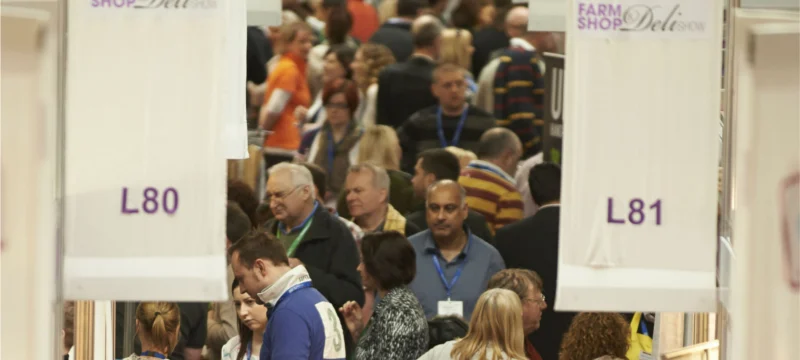
At this year’s Farm Shop & Deli Show, Dragons’ Pantry returns to once again give daring entrepreneurs the chance to pitch their products to a panel of experts which may result in them walking away with new listings and business deals.
Dragons at the 2014 show cover the breadth of the food and drink industry from foodservice, retail and wholesale through to journalists and broadcasters – and even a real-life investor who last year backed one of the firms.
The line-up includes Tim Lowden, buyer at Food Finders; Owen Gower, global purchasing manager at Gate Gourmet; Rachel Podmore, buyer at Swithenbanks Foods (3663); Paul Hargreaves, founder and managing director at Cotswold Fayre, Mark Williams sales director Hider Foods; Zoe Farmer, Concessions manager, at the Garden Centre Group (formally Wyevale); and John Gill, buyer at Booths.
You’re running the Dragons’ Pantry at Farm Shop & Deli Show. In your opinion, what are the biggest challenges facing speciality entrepreneurs today?
By far the biggest challenge for speciality retailers is competition with the multiples. The big supermarkets are increasingly listing more and more speciality products and are even competing at a speciality level with their own label brands e.g. Tesco Finest and Sainsbury’s Taste the Difference ranges.
At the same time, the speciality market is also facing increased competition from online retailers with new ones popping up all the time and taking consumers off the high street. These online retailers stretch far and wide and include anyone from Amazon right down to very small e-commerce sites.
Most speciality retailers cannot compete with the multiples on price or footfall so to overcome these challenges, they need to stay ahead of the curve in other ways. This can be done through stocking new product ranges that are not available elsewhere or offering new retail concepts that appeal to today’s consumer. Most importantly though, retailers must always strive to improve their service levels – customer service sets them apart from multiples and online retailers – and recruit loyal customers.
What are the big trends you are seeing in speciality food retailing?
The street food trend will continue to exert its influence on speciality retailing – food produce from Asia, South America and North Africa is fuelling demand and interest from consumers. Unusual products are also starting make their mark. Bee pollen is one example which can be used as a seasoning to add a whole new flavour dimension to products.
Foodservice is also a big trend that the speciality industry really needs ensure they are exploiting. For retailers this means giving over more space to food service in store, compared to ambient merchandising – by offering either full café facilities or at the very least a ‘cake-out’ service. There is often a much higher margin on this side of the business. Likewise producers should take note and start to think about how they can adapt product ranges for the foodservice market. For example a jam producer may currently offer small jars of product for retail distribution, however they could be taking a much bigger share of profits by upscaling production to offer cafés and restaurants bigger units of product.
A final trend that will be ever more evident in 2014 is health and wellness. The obesity epidemic is already making headlines and the speciality industry will come under pressure to deliver healthier products that are lower in fat, sugar and salt. However, this cannot be at the expense of taste so producers will have to be creative in their product development. Examples include removing salt and replacing with other ingredients that will deliver the same depth of taste like bee pollen, or using honey as a natural sweetener instead of sugar.
If you could offer one piece of advice to someone considering entering the speciality food market, what would it be?
If they are truly determined to enter the industry, then my advice is to get some help from someone who’s been there and done it. The average life of a deli is just three years and this is the point at which most are starting to make profit.
It’s not easy starting out in the speciality market but there are plenty of people on hand that are only too ready to offer their experiences and advice. The Guild of Fine Food, Cotswold Fayre and Thyme and Tide all offer invaluable counsel on setting out in the speciality industry – there is usually a cost involved but the benefits of getting things right first time outweigh this in the long-term. There are also lots of consultants, like my company P2P Food Solutions, who entrepreneurs can have a chat with for nothing to see what approach might be the best.
What can we expect to see in this year’s Dragons’ Pantry?
This year’s Dragons’ Pantry will see quite a mix – there will be some traditional products, some new world, and we’re seeing quite a lot around street food flavour profiles. There will also be some exciting new brand launches, which include anything from healthy ice slush drinks and healthy coffee through to savoury snacks and kits for making your own food at home.
We’re also looking at taking the Dragons on tour for the first time. We’ve always brought the brands to the dragons but maybe this year it’s time to take the dragons out on the show floor where they may find some more interesting products.